Transcribe all your audio with Cockatoo
Blazing fast. Incredibly accurate. Try it free.
No credit card required
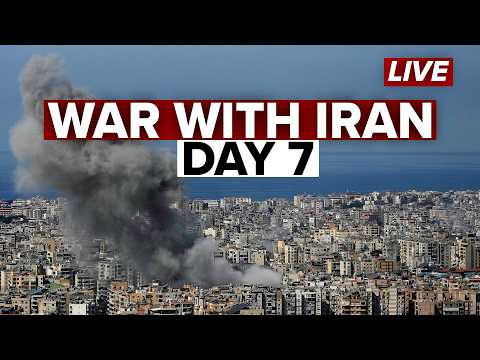
WAR UPDATE Day 7: Israel War with Iran Continues to Expand to More Countries | CBN NEWS
CBN News
Thanks for joining us for this CBN News YouTube Live from our Jerusalem studios. I'm here with Chris Mitchell along with Joshua Swanson. Joshua, this is Day 7. Incredible changes, historically, spiritually, biblically, here in the Middle East.
It's a head shaker, Chris. It's unbelievable. Every day there's another revelation. Yes. Something new that you're just like, what just happened?
Yeah, I know. So much has changed since just last Saturday morning when we came here. That's right. We're in it the first day. That's right. Today we're going to have George Thomas, CBN International correspondent. We'll have him from Armenia.
We'll have a live update from CBN correspondent Paul Petit, and also from Rabbi Pasek Wolecki from Israel 365 later in the program. But first, here's our update from today's events here in the Middle East.
In Washington, Secretary of War Pete Hegseth says the United States is prepared for a prolonged confrontation with Iran and has the military resources to sustain it. We've got no shortage of munitions. Our stockpiles of defensive and offensive weapons allow us to sustain this campaign as long as we need to. According to Reuters, the joint U.S.-Israeli campaign against Iran is now entering a second phase, focusing on ballistic missile facilities buried deep underground.
The war is nearing the end of its first week, after initial strikes reportedly killed multiple senior Iranian leaders and sparked a wider regional confrontation, as Iran responded with attacks on Israel and strikes on other countries in the Gulf and Iraq. Israel's ambassador to the United Nations says the international community must recognize the broader threat posed by Tehran.
YOSSI ALEI, Israeli Ambassador to the United Nations to the Gulf of Mexico and Iraq, speaking to the United Nations on Twitter, July 26, 2016. Iran has struck more Arab countries than Israel has in its entire existence. This is a regime going down and trying to set the entire region on fire at its force. It will not work.
The Israeli military says it has already destroyed hundreds of Iranian above-ground missile launchers capable of hitting Israeli cities. In a statement yesterday, the Israel Defense Forces issued an evacuation warning to civilians near Tehran ahead of new strikes. Urgent warning to all ind the Abbas Abad industrial
industrial area near Shar Paktash. In the coming ho in the area to strike mil
of the Iranian regime. We
will finish this job as t the conflict widens, Iran is also accused of striking still another country in the region, Israeli ally Azerbaijan.
MOHAMMAD JAHANI, Iranian President Translator, Iranian National Media Group
Today, a terrorist act was committed by Iran against the territory of Azerbaijan and the state of Azerbaijan. The targets of the attack were civilian facilities. The state of Azerbaijan
strongly condemns this heinous terrorist act. A new front could also be forming along Iran's western border. Regional sources say Washington and Jerusalem have quietly approached Kurdish leaders in Iraq and among Iran's Kurdish opposition groups about opening another front against Tehran. Along the mountainous frontier between Iraq and Iran, Kurdish Peshmerga fighters are reportedly mobilizing as American and Israeli airstrikes weaken Iranian positions in the region. Iran has already responded by striking Kurdish headquarters inside Iraqi Kurdistan.
Security concerns are also affecting daily life here in Jerusalem. Authorities have temporarily closed the Temple Mount and other holy sites in the Old City to all worshippers from every faith.
The Home Front Command Directives called for the temporary closure of holy sites here in the Old City of Jerusalem, including the Western Wall and the Temple Mount. These precautions already proved to be necessary, as we've seen an Iranian warhead land just a few hundred meters from the holy sites only a number of days ago
has also targeted Hezboll as tensions are rising al border. Nearly 500,000 He evacuated southern Lebanon launched 24 attacks in th leaders say the coming da
whether the war remains c nations into a widening Middle East conflict. Joshua Swanson, CBN News, Jerusalem.
"99% accuracy and it switches languages, even though you choose one before you transcribe. Upload → Transcribe → Download and repeat!"
— Ruben, Netherlands
Want to transcribe your own content?
Get started freeWell, it's 5 p.m. here, local time in Israel, actually just a little bit before Shabbat begins here in Israel and around the country. But a lot of developments here throughout this day, and for that we'll bring in Paul Petit for the latest Paul what's what's been
happening today? Yeah Chris as you know it's pretty much a development a minute with the war going on but to your point Shabbat is underway as the sun's about to set people preparing for that I noticed it was very quiet on the roadways even going to work this morning people still pretty much sheltering in place wherever they can. But that wasn't the case in Southern Israel.
A small number of missiles fired there. There are no reports of any injuries. Now, since the war began, Hezbollah has fired hundreds of missiles all over Israel. Probably, and the numbers vary, less than a dozen have actually hit.
Not of that, we know that there are 10 people that have been killed, 1,200 that have been injured the most serious were on Sunday in Tel Aviv. And then just outside Israel, where those 10 people died in separate incidences there. But yeah, it was just on this balcony earlier in this week, we were all standing here watching a rocket from Iran right over our heads here
and an interceptor taking it out of the sky. So much quieter that has been pretty much all this week.
Paul, obviously all week we've been reporting on how this war continues to expand. Multiple countries in the region are involved. But now this morning we're reading reports that Russia is getting involved. What can you tell us?
Yeah, that's pretty big news, but to an extent. So to bring you up to the minute, 15 waves of strikes by the IDF, mostly focusing on Tehran today. And with that, the most significant development is one of those targets.
And one of those strikes was on Ayatollah Khamenei's personal command and control bunker. So that has been taken out by the IDF. Now back to what you were mentioning, there was a Washington Post report saying that Russia has been assisting Iran by providing locations of U.S. military assets throughout the Middle East. So this includes warships, this includes aircraft, according to the report.
If it is in fact accurate, well, that is a huge development. Because we know that more than, what, a dozen countries have jumped into the fray now since Iran started firing missiles all over the Gulf states. Now, how they knew where those military assets, which they were aiming for, were,
well, Russia could in fact have played a part. However, Secretary of War Pete Hexeth spoke to reporters earlier in the week and he says that Russia was not really a factor, quote unquote, but he used interesting choice of words there, he said, not really a factor.
So were they not a factor at all or were they not really impactful in these decisions? More on that, we'll have to find out.
Yeah, one of the first things that happened during the war, Paul, was that they closed the airspace right around Ben Gurion airport. We know that it's been reopened, but lots and lots of people, both that want to come back and that want to get out of Israel, want the, want to know the latest.
What is the latest? Yeah, well, they could come in, they just can't go out. That is the country. So the first few days starting yesterday was on what they call repatriation, getting those people stuck all over the Middle East back home. And that's gonna continue through tomorrow. Then on Sunday, they're gonna have their first outbound flights, but
a lot of restrictions. Listen to this, only two narrow body aircraft to depart per hour. That's not a lot of planes, capped at 50 passengers per flight. And also passengers have to sign a form, we're learning, saying that they will not return to Israel
for at least 30 days. Paul, obviously Hezbollah is also a concern, Lebanon in the north, we're already taking on rocket fire, missile fire from Iran. So those of us who live here in Israel are very concerned about what's going on in the North. What can you, what's the update on Lebanon?
Yeah, that hasn't let up at all. You could call it unfinished business on the part of Israel. That's exactly what's happening. They're continuing their barrage of fire, rocket fire into Lebanon. And there's been a huge amount of people fleeing. They've been ordered to evacuate. We're talking a half a million people in those Hezbollah areas, which is mostly to, to the South suburbs, if you will. And so that is continuing and will continue in the coming days. A report out just an hour ago, by the way, from the IDF saying more than 70 Hezbollah operatives
have been killed since Hezbollah joined in the fight.
Well, Paul, great reporting. It's great to have you out on the streets in Israel.
You bet, Shabbat shalom.
Shabbat shalom, yeah.
Lebanon has certainly become one of the major stories out of this seven day conflict now, but also there's another strategic place, Armenia. And George Thomas, our senior international correspondent, is right now in Yerevan, the capital of Armenia. And George, thanks for joining us.
Tell us why Armenia is so strategic right now.
Well, in many ways, it's the one country that surrounds Iran that has not been hit by the Iranians. You've got Iraq, you've got parts of Turkey, you've got the Gulf countries. In fact, Azerbaijan on the other side of Armenia has been hit, but it's strategic
because in many ways they have a delicate relationship with the Islamic regime in Iran. At the same time, they've also called out the Russians. They have a relationship, strategic relationship, with the United States. So you know, again, but the most important thing is, and the reason why we're here, as well as Operation Blessing, humanitarian aid workers are on the ground prepping for what could potentially
what we could potentially see is a refugee crisis, right? As this continues to escalate, the potential of hundreds, perhaps thousands of Iranians fleeing from the capital, fleeing from big cities like Tabriz, which is just across the Armenian border, and it's the one border around Iran that is open. The Armenian side is open, even though this morning we were hearing that the Iranians have closed it off. But again, as we saw in June 2025,
Chris, when during Operation Midnight Hammer, thousands of Iranians fled to this region, fled north to Armenia, crossing the border. But it's also very significant in light of what's happening and the news about the Kurds, and we can talk about that here in a second.
Yeah, George, well, let me double-click on that. The Kurds, everyone is watching what's happening with the Kurds. We saw reports that the U.S. and the Israelis were strategically bombing locations to create a path for the Kurds. So they might be the tip of the spear in terms of the ground game, the ground invasion. What does that mean for Armenia? What does that mean for the refugee situation?
Yeah, excellent question. As you said, you know, the US and Israel have been softening the ground here on the western side of Iran, not too far from where I am today, Armenia. It's right around the corner, so to speak. But you're right. Again, the Trump administration spoke with Armenia, Kurdistan's Prime Minister Barzani. He know, he has welcomed the help of the Kurds. Look, the many Iranians that I have been speaking to said, listen, as long as, you know, they're a little reticent about the United States urging the Kurds to come across the border, because the last thing Iranians need right now is they're fighting for their survival, attempting to, you know,
with the help of the United States and Israel, bring this regime down. The last thing they need is for a splinter movement in this inside this country where the Kurds take a chunk of Iran, the Azeris with their connection with Azerbaijan take another chunk. You've got the Kurds, the Turks, the Baluch people, ethnic groups. So Iranians have spoken to say, listen, we welcome the Kurds,
but as long as their spirit and their campaign is about unity and that they don't have any greater aspirations to create a so-called Kurdistan homeland, that they're fighting for all you
Iranians not just for the Kurds then they welcome that support. Yeah, I know there's a danger of fragmentation of Balkanization Do you think that maybe and apparently that Israel has been in touch with the Kurds for many months? Do you think there might be an agreement by the White House and by Israel saying to the Kurds, listen, we'll support you, but don't go ahead and set up your own autonomous region there in Iran.
Yeah, and that's exactly what the majority of Iranians that I've spoken to say are hoping. They're hoping that behind the scenes, Chris, that the Israelis and the Americans are not making some kind of a secret deal that in exchange for their boots on the ground and their efforts to go up against the IRGC, that the Israelis and the Americans agree to the Kurds setting up their own autonomous region, or they take a chunk of western part of Iran.
That is not what the folks, you know, inside the country... I just spent some time talking to Iranians who have in the last few weeks, last few months since June 2025, have escaped from Iran. They overwhelmingly say to me they do not want to see this balkanization, this fragmentation of the country. And so again, I reiterate the importance that while the United States looks out to the Kurds to help, to be the boots on the ground, so to speak, they do not want the Kurds to kind of meander from that mission to have their own greater Kurdistan kind of homeland in mind. The whole idea is you're fighting for the entire territorial integrity. We got to maintain the territorial integrity of the country,
and we have to fight across ethnic groups all together as one, as Iranians all together,
despite our various ethnic divisions or separations. George, Armenia has historically strong ties with Iran. I think there's even energy trade that happens, natural gas. Are the residents of Armenia, are they feeling it? Are they feeling the war? And are they concerned about if or when the regime falls, what that means for them?
"Cockatoo has made my life as a documentary video producer much easier because I no longer have to transcribe interviews by hand."
— Peter, Los Angeles, United States
Want to transcribe your own content?
Get started freeYeah, absolutely. They already have, you know, they've had the conflict with Nagorno-Karabakh and the and Azerbaijan. They've got that history. You've got, I
don't know, the tens of thousands of refugees from that crisis. And then obviously, from 2025, during Operation Midnight Hammer, they are keep in mind, they're a very if you look at
the map of Armenia, it's a small sliver sandwiched between Turkey and Azerbaijan. And so they know the challenges and the strain that it can put on the infrastructure. But you know, the thing is, you know, the overwhelming number of Iranians that I've spoken to, and I've had contact with over the many years, you know, they always say, listen, we don't want to stay in Armenia. We don't want to stay in Turkey or in Azerbaijan. We want to go back home.
So I think if you do see a refugee crisis, you know, come into Armenia, they all want to go back home at some point when it's safe, obviously. And there's some understanding that the regime has been neutralized as best as possible. Again, that's their goal. They have no desire to stay in Armenia long term.
Yeah, George, it seems like two factors that really play a role in maybe having the regime fall, well, maybe three. Certainly the bombing campaign is really decimating so much of the infrastructure, but also the fact that this possible invasion by the Kurds. And the third one could be immunity. Do you see the likelihood of this defections
and some of the IRGC accepting this deal of immunity by President Trump is extending?
Yeah, excellent point, Chris. And it's an important one, boy, oh boy, very, very important. The president has, since last Saturday, has been really encouraging the IRGC, lay down your weapons. I mean, my question is, who did they,
from a logistics standpoint, who did they hand their weapons to? That hasn't been clearly specified by the administration. And there is some reporting, I'm sure you guys have seen it because you monitor everything in that region. There has been some reporting
in the in the last 24 hours that that some senior IRGC officers have fled to Beirut. Again, there's no confirmation on that. But the other thing I am very concerned about is that a week on into this massive aerial and Navy assault, we really have not heard or seen any mass defections from the IRGC, from the Iranian Army, or from the Quds Force or from the Basiji Force. It doesn't look like we are seeing that mass, you know, in sort of defection.
And that is very, very concerning, I think, going forward for the United States, for Israel, because they really need to see that. They need to see some turncoats within the military apparatus to say, listen, hey, we want to work with you. We want to work on the other side against the regime there's no indication could that happen in the days and weeks ahead absolutely as the pummeling continues absolutely as
the Israelis and the US continue to hit their command and you know their central command you know headquarters and the various all across the country as they continue to destroy that.
Could we see defections?
Yes, but right now a week in, we're not really seeing any of that and that can be concerning for sure.
George, how is our Operation Blessing team preparing? What's happening on the ground there?
Yeah, boy oh boy, I tell you what, Joshua, these guys are experts, right? I've seen them pretty much all around the world when you've got major disasters, whether it's war, hurricanes, typhoons, you name it. Boy these guys know exactly what they're doing. They're working with local partners. Keep in mind CBN has had a very long-term relationship here in Armenia as well as next door in Azerbaijan. And so they're working with
the local churches here in Armenia but also the local Iranian community. So they're partnering with major organizations, parachurch organizations. They're gearing up. They're getting non-perishable items, things for, you know, a baby formula, clothes for children and so forth. They're gearing up big time. Again, they want to be positioned either at the border and they're talking about, you know, being able to provide 24 hour meals to people who come across the
border, first aid kits, hygiene kits and so forth. These guys are experts because they are veterans. I mean, I saw this firsthand in Ukraine when they covered, when the war just had just started. I've seen it all around the world. These guys are just absolute pros and they know exactly what they're doing and they're going to be there in case you see a flood of refugees coming across the border. They are definitely ready, ready to go for sure.
Final question, George. You've been all over the world. They are definitely ready, ready to go for sure.
Transcribe all your audio with Cockatoo
Get started freeFinal question, George. You've been all over the world. You've been in Ukraine. You've covered that war. Hotspots galore. You've been down in Sudan. Tell us, you're covering this war. How significant is it? How would it rate in terms of how geopolitical landscape or earthquake this represents to the Middle East
and the world for that matter? Oh my gosh, Chris, are you kidding me? Bro, this is monumental. I was talking to somebody today, an Iranian believer who came out of the country just a few months ago. I said, did you ever imagine after 47 years from Jimmy Carter all the way to Ronald Reagan to George W. Bush Sr. to George W. Bush Jr. to Barack Obama, you know, President Bill Clinton, none of these administrations with, you know, they knew that Iran was a thorn in the side of the United States for 47 years. And to imagine that today, this is
occurring, this is unfolding in your country, is absolutely, absolutely monumental. The fact that you've got Hezbollah pretty much on the ropes, Hamas on the ropes, the Houthis, they've been basically silent so far. And then going after the sort of the head of the of the octopus, so to speak, Iran, the Islamic regime. This is absolutely monumental and how it's going to change the dynamics of the region is going to be absolutely monumental. But the other thing I think, you know, there's a phrase that all roads to Beijing lead through Tehran. Well, guess what? The United States is absolutely
engaged in Tehran. And if I was in Beijing, if I was the Communist Party leadership of Xi Jinping, I would be very, very concerned. Keep in mind, 90% of Iran's oil gets guzzled by the Chinese. And now that's in, you know, they're feeling the pinch. Another big consumer of Venezuelan oil is China. And so this, like I said, all roads to Beijing lead through Tehran. And this is going to be a game changer also for China as well as for Russia.
Great analysis, George. I know people are focused on Iran, but China is certainly in play in this war right now. George Thomas, CBN senior international correspondent there in Yerevan. Great to be with you. Stay safe brother.
Thank you. I appreciate it guys.
As George mentioned there's so much need everywhere in the world but but our team operation blessing has been on the ground Preparing for this moment to help the people of Iran. We're expecting refugees in and out and we want to be prepared So if you'd like to participate in that if you'd like to help us help the people of Iran There's a QR code on the screen that you can shoot with the camera on your phone It'll take you to a landing page. Also if you're watching on YouTube, just below there's a donate button. All that money goes into the Operation Blessing Fund. And one interesting fact that I want you guys to know about, we've been broadcasting undercover for the last 20 years via our ministry called Mohabbat. So we are
invested in this region. This isn't just something that we said, oh we should probably help Iran. Now Operation Blessing and our ministry, Mohabbat, all part of CBN, have been ministering to and blessing this region for a long time. So if you'd like to help us continue that, consider donating.
Chris?
Yeah, one of the main things that people have been asking since this war began, how do we pray? How do we pray for this war with Iran? And to help answer that question, I talked earlier this week with Rabbi Pasek Woleki from Israel 365 and gives his perspective on how biblically to pray about this war. Here's that interview. Rabbi Pasek Woleki from Israel 365, thanks for joining us. You know, it's a reflection
of life right now in Israel that we scheduled this interview about 15 minutes ago, but you couldn't do it. Why was that?
I was in a bomb shelter. We had an air raid siren here in Beit Shemesh and I had to go to the bomb shelter. It was, it was great timing. I think the enemy knew that Chris Mitchell and Pesach Wielicki were about to have a conversation trying to disrupt our lives, but here we are.
Yeah, here we are. Yeah, we're back. We're back at it. And tragically, you are in Betshemesh and what happened the other day. Talk about the impact on the community
of the direct hit there in Betshemesh. Oh, it's a, yeah, it's a terrible tragedy for the community. You know, a father and mother and four children, an entire family, among the other casualties, an entire family was wiped out. And that's a special kind of tragedy. I say special in a negative way. When you, it's not just the loss of family members who can then, you know, move on and
rebuild. We're talking about the wiping out of an entire family in Israel, and among others who were killed. It was also, look, for me personally, it was about a 15-minute walk from my house. My daughter, who's in high school, and her friends were friendly with one of the... with the child of one of the people who was killed, so it's kind of affected them directly.
And it also changed the festival of Purim, which is usually a time of great community gatherings and communal rejoicing. And as auspicious as it is that we're at war with Persia right around the time of the Purim festival, which commemorates a victory over a Persian regime that had a genocidal decree against the Jews,
which is unbelievable. The original death to Israel decree coming out of Persia was in the Book of Esther. As auspicious as that is, it also, for our own community here in Beit Shemesh, it really put a damper on the entire festival, a very difficult time. Yeah, I'm sure. Also, Peisak, our correspondent Paul Petit was out there at the scene with Rabbi Tuli Weiss from Israel 365 as well. What's your assessment? Where are we right now? Well, Secretary of War Hexeth said yesterday that the United States and Israel have achieved
complete air dominance. And that means total freedom of operation from the air. It basically means that there's no more fear of any drones or any type of aircraft bombers going overhead being shot down. And that means that degrading Iran's remaining capabilities is like shooting fish in a barrel at this point.
"Your service and product truly is the best and best value I have found after hours of searching."
— Adrian, Johannesburg, South Africa
Want to transcribe your own content?
Get started freeAnd at the same time, we also see that ground operations have begun, not by the Americans or Israelis, but the Kurds who've been armed and backed by the Israelis and the Americans, launched an invasion in the northwest yesterday. So I think we're moving into a new phase of this where what we're going to see is Iran's ability to fire back, to fire at its neighbors, to fire at Israel, is going to be- is already being greatly diminished.
But I think that we're seeing the last gasp of that. And now the- and now the question becomes what happens on the ground going forward. And that's a very big question. You know, everyone's been talking about regime change and what does it look like and what are the risks involved. And I think that that's the big question going forward. President Trump addressed it directly for the first time yesterday, Chris. And if you want to get into that, I think there was something, I think it was quite revealing and a little bit disturbing what
he had to say. You mean about regime change?
About regime change, yeah. What he said, when he was meeting with Chancellor Merz from Germany, he was asked by a reporter about the regime change and he said that there were people that they were planning to work with who were now been killed and then the other people they were planning to work with maybe also were killed, which indicates that the Americans were hoping for some people within the existing regime who would turn and become helpful partners. And then he doubled down on that without saying that explicitly by talking about how well
regime change went in Venezuela, where Maduro was removed. And he talked about how well it's working with Delcy, Delcy Rodriguez, who was Maduro's number two, who is now working with the Americans, and he was lauding the fact that they kept the government intact and it didn't devolve into chaos, and he contrasted that with the Iraq situation, where all the regime after Saddam Hussein fell were removed and it devolved into chaos. And what that signaled to me is that what Trump is looking for is not really a total regime change.
He's not looking for an upheaval that brings a new democratic order, but that he's looking for some people from within the regime who are more moderate, who are willing to become kind of technocratic partners and keep things together. But for the Iranian people, that might mean that the same mobsters and criminals who are running the show until now could remain in charge even under even though they're cooperating with the Americans.
It won't bring freedom to the Iranian people, even if it does bring more stability and security to everyone else.
There would be disconcerting to a number of people, especially the people inside Iran.
Chris, that's a great interview. Obviously ending on regime change. That seems to be the big topic that we're all talking about in the news, but I really appreciated how the rabbi brought in the personal reflection. He's 15 minutes from where the Tremeshim tragedy struck, and his family's connected with other families.
I mean, it's so easy when we're all consuming all the news and the numbers and the data and the historic moment to forget that there are so many lives that have been affected both in this war right now, but in the last 47 years since this regime has been brought into place.
And so that's why we pray.
Yeah, exactly. And especially here in Israel, you know, there's a, there was a movie, Six Degrees of Separation. You connected to anybody in the world here, it's like one. Yeah. You know, you're connected to somebody who's been affected by this. You met with Tuli Wise, Paul met with Tuli Wise, a good friend of Pesach, Welicke.
Yeah, 15 minutes. That is a short distance and a loud explosion that happened that day. It is.
It is. And so much tragedy, but in the midst of that, our God is a God of comfort, a God of peace. So I think that's what we should pray about. Sure. If you're okay with us praying.
Oh, well.
It's what we do every day.
I beat Chris, too. Typically, for those of you at home who watch us often, Chris is the guy who always leads us to prayer, which is why we respect him so much. But this time, it'll be me.
So go ahead.
Transcribe all your audio with Cockatoo
Get started freeOkay. Heavenly Father, hallowed be your name. We come before you humbled at the loss of life, humbled at just how evil war is, Lord. And Lord, we pray for peace somehow.
We pray for your peace, for your comfort over the families who have lost loved ones. And there's so many families, Lord, given what happened and has been happening in Iran for so long. So we pray that this regime will be ended. There will be regime change. It will be peaceful somehow. And the outcome will be freedom for the people of Iran,
for those here in Israel who have lost lives, who have lost limbs, who have lost cousins, family members, Lord, we pray for their comfort. We continue to pray for Your peace over this place, for Your covering over this land, and for Your blessing over this land.
We just pray that today on this Shabbat in Jesus' name.
Yeah, Father, as we enter into Shabbat, we pray, Father, for the peace of God that passes understanding to rest upon Israel and the Middle East, for that matter, for all the people that are in harm's way. Many more people than expected to be throughout UAE,
Bahrain, Saudi Arabia, even Azerbaijan. We pray for protection for all the peoples of the Middle East. We pray for peace for all the peoples of the Middle East. We pray for peace for the people in America who have loved ones here in the Middle East and they might be anxious about what's happening. So we pray you would protect them. Again, as we have prayed for wisdom for President Trump, Prime Minister Benjamin Netanyahu,
Secretary of War Pete Hegess, Secretary of State Marco Rubio. Father, give them such extraordinary wisdom that they would be your servants, instruments in this time. And as we've talked, and as we talked with Rabbi Pasek,
what time is this? Sometimes it's a time for peace, sometimes it's a time for war. And we pray that this war would have fruits of freedom. And Lord, that as one friend of mine said, maybe this is the aligning of the nation so to prepare for a great end time harvest.
So we do pray for that harvest of souls from this. And we pray again for the church, our brothers and sisters in harm's way in Iran, protect them and help them minister to their neighbors and their loved ones there in Iran, the good news of Jesus. And we ask this in Jesus' name. Amen.
Amen.
Wow, Joshua, here we are, end of one week.
One week.
Yeah.
I wonder where we will be seven days from now.
Exactly, we'll see, but we'll keep praying. And so thanks for joining us. And I'm Chris Mitchell for Joshua Swanson and all of us here at the Jerusalem Bureau. Thanks for joining us. And we'll see you next time on Jerusalem Dateline later today and Lord willing, on the next YouTube Live. And we'll see you next time on Jerusalem Dateline later today and Lord willing, on the next YouTube Live.
God bless.
Get ultra fast and accurate AI transcription with Cockatoo
Get started free →